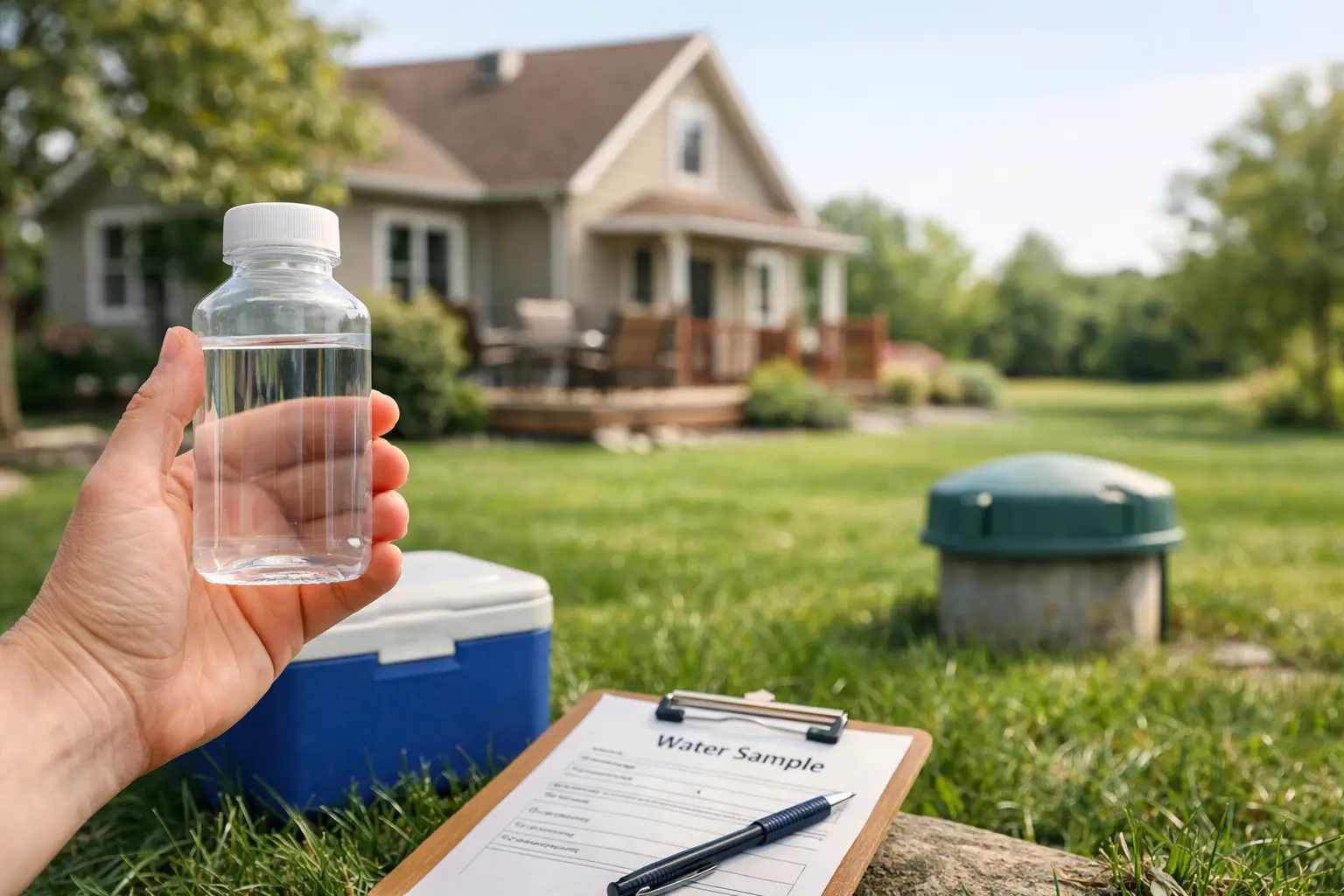
Many people assume water testing works the same way for every home. If water comes from a faucet, it may seem like the testing process should be simple and universal. But public water and private well water are managed very differently. Because of that, the testing responsibilities, risks, reports, and maintenance steps are also different.
A home connected to a public water system usually receives water from a regulated supplier. A home with a private well usually relies on groundwater from the property or nearby area. Public water systems are monitored by utilities and regulators. Private wells are usually the responsibility of the property owner.
This difference matters because it changes what you should test for, when you should test, and how you should interpret results.
At Water Testing Info, the goal is to make water testing easier to understand. Whether you use public water or a private well, testing can help you learn what is happening at your specific tap.
The Main Difference Is Responsibility
The biggest difference between public water and private well water is responsibility.
Public water systems are usually operated by a city, town, water authority, utility, or community supplier. These systems must follow drinking water rules, monitor regulated contaminants, treat water when needed, and provide information to customers.
Private wells are different. In most cases, the homeowner or property owner is responsible for testing, maintenance, treatment, repairs, and recordkeeping. There is usually no water company automatically testing the well on a routine schedule for the owner.
This means private well owners need to be more proactive. If they do not test, they may not know whether water quality has changed.
Public Water Is Tested at the System Level
Public water testing usually happens at the system level. The water supplier collects samples from required points in the system and reports results according to regulations. This testing is important because it helps confirm that the water system is meeting required standards.
However, system-level testing does not always answer every household question. Water may meet standards when it leaves the treatment plant or distribution system, but it can still be affected by service lines, building plumbing, fixtures, filters, or water heaters.
For example, lead may enter water from older plumbing or fixtures after the water has already left the public system. Sediment may come from pipes or local repairs. Taste and odor may be affected by household filters or plumbing conditions.
Public water testing is valuable, but tap-specific testing may still be useful.
Private Well Testing Is Property-Specific
Private well testing is different because the water comes from a specific well serving a specific property. The result can be highly local. Two homes on the same road may have different well depths, different geology, different nearby risks, and different treatment systems.
A private well may be affected by septic systems, fertilizers, pesticides, flooding, nearby construction, natural minerals, industrial sites, old wells, or poor well construction.
Because the well belongs to the property, the owner should test based on the property’s conditions. A neighbor’s good result does not guarantee your well has the same water quality.
Private well testing is personal to the property.
Public Water Reports Are Helpful but Limited
Many public water customers can access a water quality report from their supplier. This report may include detected contaminants, source water information, treatment details, and compliance information.
These reports are helpful, but they do not replace tap testing in every situation. A public water report may not tell you whether your home has lead in the plumbing, whether your faucet aerator has sediment, whether your building pipes are affecting taste, or whether your filter is working.
Think of the public water report as the system’s report card. A tap test is your home’s report card.
Both can be useful, but they answer different questions.
For more on rules and standards, visit the regulations page.
Private Wells Usually Do Not Come With Automatic Reports
A private well owner usually does not receive an annual water quality report unless they order testing themselves. This is one of the biggest reasons well owners should keep their own records.
A private well test report becomes part of the property’s water history. It helps the owner understand baseline water quality and compare future results.
If a well owner tests once and never tests again, they may miss changes over time. Groundwater can change because of weather, nearby land use, repairs, flooding, drought, septic problems, or treatment system failure.
Private well records are especially important when selling, renting, or maintaining a property.
Common Public Water Testing Concerns
Public water users often test because of tap-specific concerns. These may include lead, copper, chlorine taste, hardness, sediment, discoloration, odor, pH, and filter performance.
Lead and copper testing can be important in homes with older plumbing, brass fixtures, lead service lines, or corrosive water. Chlorine testing may help explain taste and odor. Hardness testing may help with scale and appliance concerns.
Public water users may also test after main breaks, plumbing work, unusual notices, filter installation, or sudden changes in water appearance.
The main question for public water homes is often: what is happening between the water system and my tap?
Common Private Well Testing Concerns
Private well owners usually need a broader testing plan. Common well tests may include total coliform bacteria, E. coli, nitrates, nitrites, pH, hardness, total dissolved solids, iron, manganese, lead, copper, arsenic, and other location-based contaminants.
Depending on the area, private well testing may also include uranium, gross alpha particle activity, mercury, volatile organic compounds, pesticides, herbicides, PFAS, sodium, chloride, sulfate, or fluoride.
Private wells should also be tested after flooding, well repairs, nearby contamination, septic system issues, or changes in taste, odor, color, or pressure.
For help understanding test types, visit the testing methods page.
Bacteria Testing Is Especially Important for Wells
Bacteria testing is one of the most important private well tests. A well can look clean and still have bacteria concerns. Total coliform bacteria may indicate that the well system is vulnerable to contamination. E. coli is more serious because it may suggest fecal contamination.
Bacteria can enter wells through damaged caps, poor sealing, surface runoff, flooding, nearby septic systems, or plumbing issues.
If bacteria are found, the next step may involve well inspection, disinfection, repair, and retesting.
Public water systems also monitor bacteria, but private well owners must usually arrange this testing themselves.
Nitrates Are a Key Private Well Concern
Nitrates are another important private well concern. They may come from fertilizers, septic systems, animal waste, agricultural runoff, or natural soil conditions.
Nitrates are especially important for households with infants. Elevated nitrate levels may create serious concerns for babies, especially when water is used for formula preparation.
Because nitrates usually do not create obvious taste, smell, or color changes, testing is the only reliable way to know whether levels are elevated.
Private well owners near farms, lawns, septic systems, or livestock areas should take nitrate testing seriously.
Lead Can Affect Both Public Water and Private Wells
Lead is not only a public water issue. It can affect any home with plumbing materials that contain lead or contribute to lead release.
In public water homes, lead may come from service lines, older plumbing, solder, fixtures, or corrosion. In private well homes, lead may also come from plumbing after water leaves the well.
Testing for lead should focus on the tap used for drinking and cooking. Sampling method matters. A first-draw sample may show what water picks up after sitting in pipes, while a flushed sample may show a different result.
Lead testing is important because lead usually cannot be seen, smelled, or tasted in water.
Treatment Needs Are Different
Public water and private well treatment needs can be very different.
Public water is usually already treated before it reaches the property. A homeowner may still add a filter for taste, chlorine, lead, hardness, or specific concerns. In many cases, point-of-use filters or whole-house filters are selected based on tap results.
Private well water may need more extensive treatment depending on the test results. A well may need sediment filtration, softening, pH neutralization, iron removal, manganese treatment, UV disinfection, reverse osmosis, carbon filtration, or specialized contaminant treatment.
The right treatment depends on testing. Without test results, it is easy to choose the wrong system.
Public Water Users Should Still Test Filters
Many public water users install filters for taste, chlorine, lead, PFAS, or general confidence. But filters should not be trusted blindly. Testing can help confirm whether a filter is working.
A filter may be certified for some contaminants but not others. A carbon filter may improve taste but may not reduce every chemical. A softener may address hardness but not lead. A reverse osmosis system may reduce many contaminants but still requires maintenance.
Testing before and after filtration can show whether the system is doing what you expect.
For help reading reports, visit the interpreting results page.
Private Well Owners Should Test Raw and Treated Water
Private well homes often have treatment systems. In these cases, it can be useful to test both raw water and treated water.
Raw water shows what is coming from the well before treatment. Treated water shows what the household is actually using after the system works.
Testing only treated water may hide source water issues. Testing only raw water may not show whether treatment is working. In some cases, both are needed for a complete picture.
This is especially useful if a home has bacteria treatment, arsenic treatment, iron filters, softeners, or reverse osmosis systems.
When Public Water Users Should Test
Public water users may want to test when:
The home has older plumbing.
There may be a lead service line.
Water has a strange taste or odor.
Water is discolored.
A new filter is installed.
A baby or sensitive household member uses the water.
There has been plumbing work.
There was a public notice or local issue.
The household wants tap-specific information.
Public water testing is often about confirming what is happening at the faucet, not replacing the public water system’s required monitoring.
When Private Well Owners Should Test
Private well owners should test more regularly because there is no utility automatically checking their well. Testing may be needed when:
Moving into a home.
Buying or selling property.
After flooding or heavy rain.
After well repairs.
After septic issues.
After nearby construction.
After installing treatment.
When water taste, odor, color, or pressure changes.
When infants or sensitive residents use the water.
As part of routine maintenance.
Private well testing should be viewed as normal home maintenance, like checking the roof, septic system, HVAC, or electrical panel.
Real Estate Differences
Real estate transactions can also differ based on water source.
Homes on public water may not always require water testing, but buyers may still request tap testing for lead, copper, taste, or plumbing concerns. Homes with private wells may be subject to state or local testing requirements during sale.
A buyer purchasing a private well property should ask for recent water test results, treatment system records, well location, well age, maintenance history, and any past issues.
A seller with a private well should prepare records early to avoid transaction delays.
Water source should always be part of the real estate conversation.
Rental Property Differences
Rental properties also differ by water source. A landlord using public water may rely on the public system for regulated monitoring, but tenant complaints about taste, odor, discoloration, or plumbing may still need attention.
A landlord renting a property with a private well may have additional responsibilities depending on state and local rules. Even when not legally required, testing and recordkeeping can help protect tenants and property owners.
Tenants should know whether the property uses public water or a private well. That information affects what questions they should ask.
Water source transparency helps everyone.
Cost Differences
Public water users may spend less on routine testing because the water system already performs required monitoring. They may still choose targeted testing for lead, copper, filters, or household concerns.
Private well owners may spend more over time because they are responsible for routine testing and maintenance. They may also need treatment systems depending on results.
However, testing can prevent wasted money. Without testing, a homeowner may buy the wrong filter, ignore a well issue, or miss a problem that becomes more expensive later.
Good testing is part of smart water management.
Recordkeeping Differences
Public water users should keep personal tap test results, filter records, plumbing updates, and any local water notices.
Private well owners should keep a more complete file. This may include water test results, well construction records, pump records, pressure tank details, treatment system manuals, filter replacement logs, disinfection records, and repair invoices.
These records are useful for troubleshooting, selling, renting, and long-term maintenance.
A private well without records can create confusion later.
Neither Source Should Be Judged by Appearance Alone
Both public water and private well water can look clear while still needing testing. Clear water may still contain lead, nitrates, bacteria, PFAS, arsenic, or other invisible contaminants.
Appearance can provide clues, but it cannot provide certainty. Taste and smell can help identify some issues, but many contaminants have no obvious sensory warning signs.
Testing is the only way to understand water quality with confidence.
Whether your water comes from a city system or a private well, clear does not always mean fully understood.
Final Thoughts
Public water and private well water are tested and managed differently. Public water systems are monitored at the system level, but household plumbing can still affect tap water. Private wells are usually the property owner’s responsibility, which means routine testing and maintenance are especially important.
Public water users often test for tap-specific concerns such as lead, copper, chlorine, hardness, filters, taste, and odor. Private well owners often need broader testing for bacteria, nitrates, minerals, metals, pH, and location-specific contaminants.
The right testing plan starts with knowing your water source. Once you know where the water comes from, you can choose the right tests, read results more clearly, and make better decisions.
To learn more, visit Water Testing Info or explore the Water Testing Info FAQ for simple answers about public water, private wells, testing methods, results, regulations, and common water quality concerns.