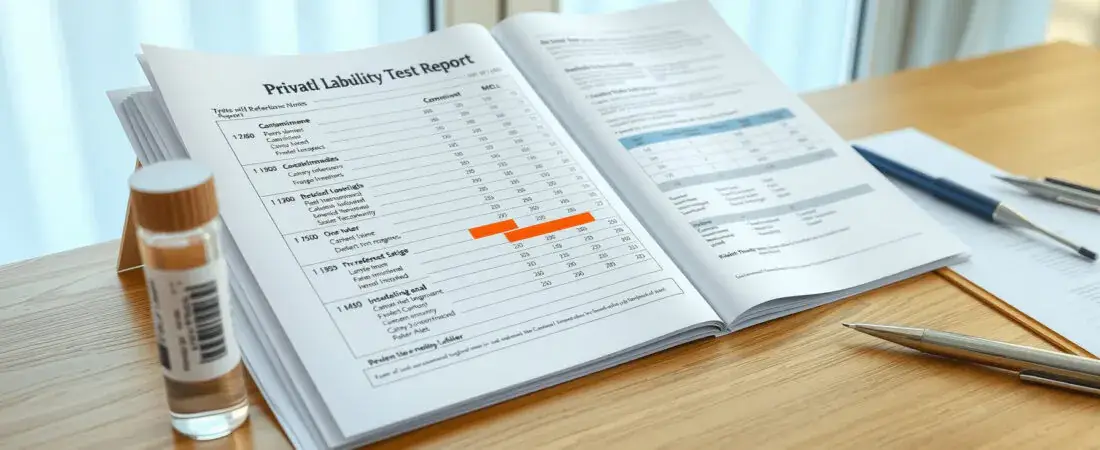
A water test report can look confusing the first time you open it. You may see contaminant names, numbers, units, detection limits, standards, symbols, and comments from the laboratory. Some results may say “not detected.” Others may show a number beside a limit. A few may be marked as high, above standard, or requiring attention.
For many homeowners, renters, private well owners, and property managers, the hard part is not ordering the test. The hard part is understanding what the report is actually saying. Does a result mean the water is unsafe? Does “not detected” mean zero? What is the difference between a health standard and an aesthetic guideline? Should you install a filter? Should you retest?
At Water Testing Info, the goal is to make water testing easier to understand. A report should not leave you more confused than before. With a few basic concepts, most people can read their results more confidently and know what questions to ask next.
Start With the Sample Information
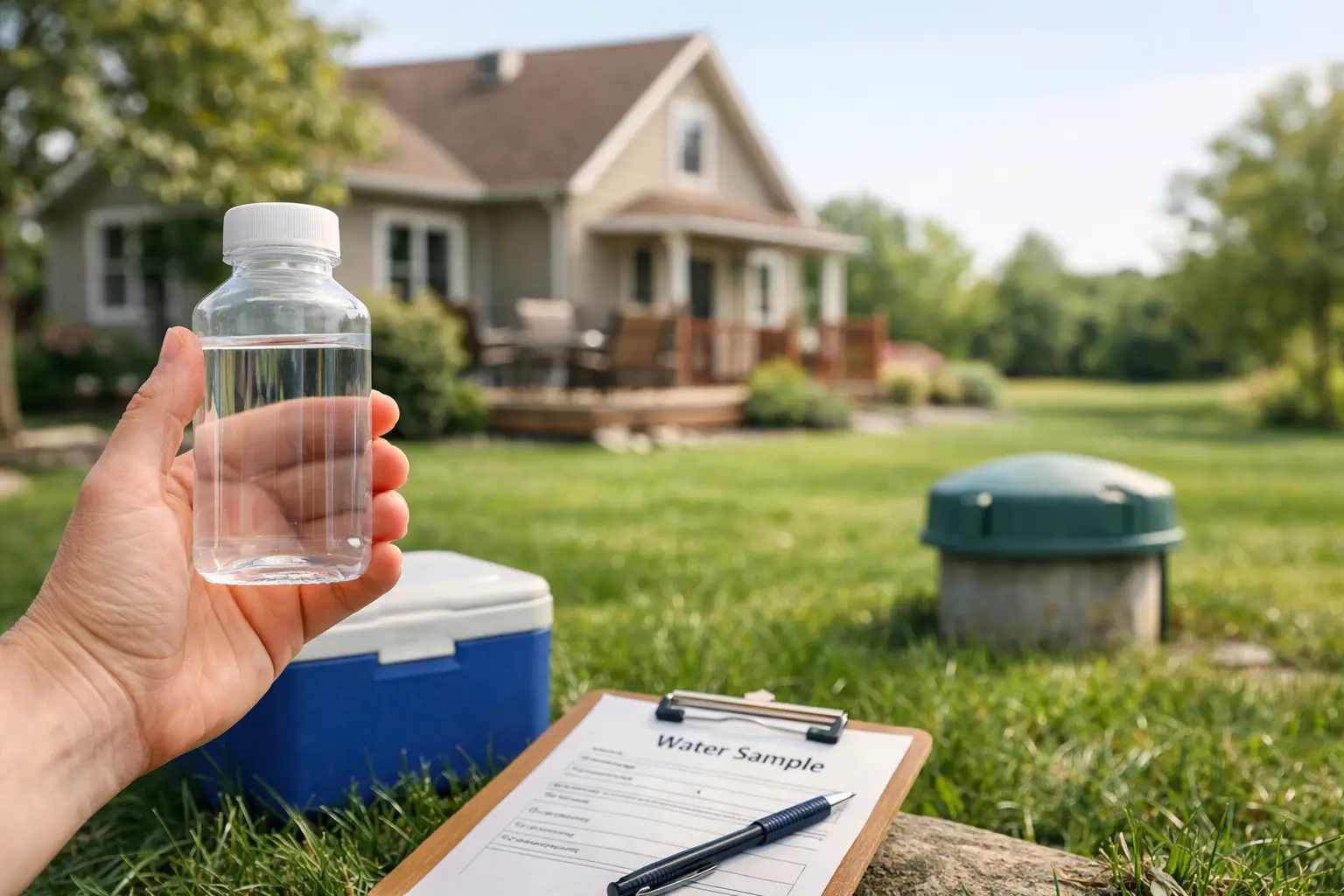
Before looking at the numbers, check the basic sample details. A report should show where the sample came from, when it was collected, when the lab received it, and what type of water was tested.
This matters because water results are tied to a specific sample at a specific time. A kitchen tap sample may not match a bathroom tap sample. A raw well water sample may not match treated water after filtration. A first-draw lead sample may not match a flushed sample.
Look for details such as:
Sample address.
Sample location.
Collection date.
Laboratory name.
Whether the sample was filtered or unfiltered.
Whether the sample was raw or treated.
Testing method or panel.
If those details are unclear, ask questions before making decisions from the report.
Understand That a Report Is a Snapshot
A water test report shows what was found in one sample at one time. It does not guarantee that water quality will never change. Water can change after plumbing repairs, flooding, heavy rain, drought, filter failure, well work, nearby construction, or changes in source water.
This is especially important for private wells. A well test from three years ago may not describe current conditions. A test before a treatment system was installed may not describe treated water today.
A report is still very useful, but it should be understood as a snapshot. Keeping multiple reports over time creates a better long-term picture.
For more guidance on how results should be reviewed, visit the interpreting results page.
Learn the Common Units
Water test reports often include measurement units that may seem unfamiliar at first. Understanding these units makes laboratory results much easier to read and helps homeowners better understand what their water quality findings actually mean.
Milligrams per liter, written as mg/L, are commonly used for minerals and many contaminants and are roughly equivalent to parts per million in water. Micrograms per liter, written as µg/L, represent much smaller concentrations and are often compared to parts per billion. Parts per trillion may be used when measuring extremely low-level contaminants such as PFAS, while picocuries per liter (pCi/L) may be used for certain radioactive substances. For bacteria, reports may use colony-forming units or presence/absence measurements.
The unit of measurement is just as important as the result itself because a number without context can be misleading. For example, a reading of 5 mg/L represents a significantly different concentration than 5 µg/L. Always review the value and its corresponding unit together to accurately understand your water test results. Lead water testing in the Bronx can help provide accurate analysis and professional interpretation so homeowners can better understand potential contamination concerns and make informed decisions about their water quality.
Compare Results With the Right Standard
Many reports include a comparison level, standard, maximum contaminant level, action level, or guideline. These comparison values help you understand whether a result is within an acceptable range or needs attention.
However, not every comparison value means the same thing. Some are health-based regulatory standards. Others are aesthetic or secondary standards related to taste, odor, staining, or appearance. Some are action levels, which mean a response may be required under certain conditions.
For example, iron may cause staining and taste problems, but it is often treated as an aesthetic concern. Lead is different because it is a health concern and should be taken seriously even at low levels.
Do not assume every marked result has the same meaning. Read the notes and compare each result with the correct standard.
“Not Detected” Does Not Always Mean Zero
One of the most misunderstood phrases on water reports is “not detected.” It does not always mean the contaminant is absolutely absent. It usually means the lab did not detect the contaminant above the method’s detection limit or reporting limit.
Every test has limits. A lab method may be able to detect a substance down to a certain level. If the substance is below that level, the report may say not detected.
This can still be reassuring, especially if the test method is appropriate. But it is better to understand “not detected” as “not found above the lab’s reporting level,” not as a promise of absolute zero.
For very low-level contaminants like PFAS, detection limits and reporting limits can be especially important.
Detection Limit vs. Reporting Limit
Some reports include terms like detection limit, method detection limit, reporting limit, or practical quantitation limit. These terms relate to how low the lab can reliably detect or report a contaminant.
The detection limit is generally the lowest level the method can identify under certain conditions. The reporting limit is often the level at which the lab confidently reports a numeric value.
If a result is below the reporting limit, it may appear as non-detect, less than a value, or with a symbol such as “<.”
For most homeowners, the key point is simple: low-level testing depends on the method. If you are testing for an important contaminant, make sure the method is sensitive enough for the decision you need to make.
Health-Based vs. Aesthetic Results
Not all water quality results have the same kind of concern. Some results are health-based. Others are aesthetic.
Health-based results may involve contaminants that can affect health at certain levels, such as lead, arsenic, nitrates, bacteria, uranium, certain volatile organic compounds, or PFAS.
Aesthetic results may affect taste, odor, staining, color, or scale. These may include iron, manganese, hardness, total dissolved solids, chloride, sulfate, or pH in certain contexts.
Aesthetic issues can still matter. Hard water can affect appliances. Iron can stain fixtures. Low pH can corrode plumbing. But they are interpreted differently from health-based contaminants.
Understanding this difference helps you respond appropriately.
Pay Attention to Bacteria Results
Bacteria results often require special attention, especially for private wells. Reports may show total coliform, E. coli, or presence/absence language.
Total coliform bacteria are indicator organisms. Their presence may suggest that the water system is vulnerable to contamination. E. coli is more serious because it can indicate fecal contamination.
If bacteria are present in a private well, the next step may include well inspection, disinfection, repair, and retesting. Do not ignore bacteria results simply because the water looks clear.
Bacteria testing also depends on proper sampling. The sample bottle must be sterile, and collection instructions must be followed carefully.
Look Closely at Lead and Copper
Lead and copper results should be read carefully because they are often connected to plumbing. Lead may come from lead service lines, solder, brass fixtures, or older plumbing components. Copper may come from copper pipes, especially when water is corrosive.
Sampling method matters. A first-draw sample taken after water has sat in pipes for several hours may show different results than a flushed sample. If the report does not explain the sampling method, ask.
If lead is detected, do not rely only on taste or appearance. Lead usually cannot be reliably seen, smelled, or tasted in water.
A result should lead to practical questions: Was the sample first-draw? Is the home older? Are fixtures old? Is the pH low? Is a certified filter needed? Should follow-up testing be done?
Nitrates Matter for Private Wells
Nitrates are especially important for private wells and households with infants. They may come from fertilizers, septic systems, animal waste, runoff, or natural groundwater conditions.
A nitrate result should be compared with the relevant drinking water standard. Elevated nitrates can require treatment, an alternative water source, or further investigation of contamination sources.
Nitrate results are a good example of why clear water is not enough. Water with elevated nitrates may look normal.
Private well owners should keep nitrate results in their long-term water records.
pH Helps Explain Other Results
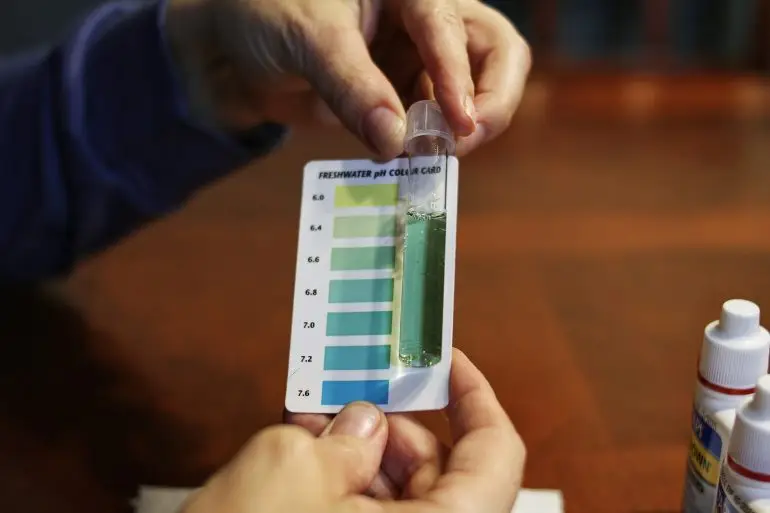
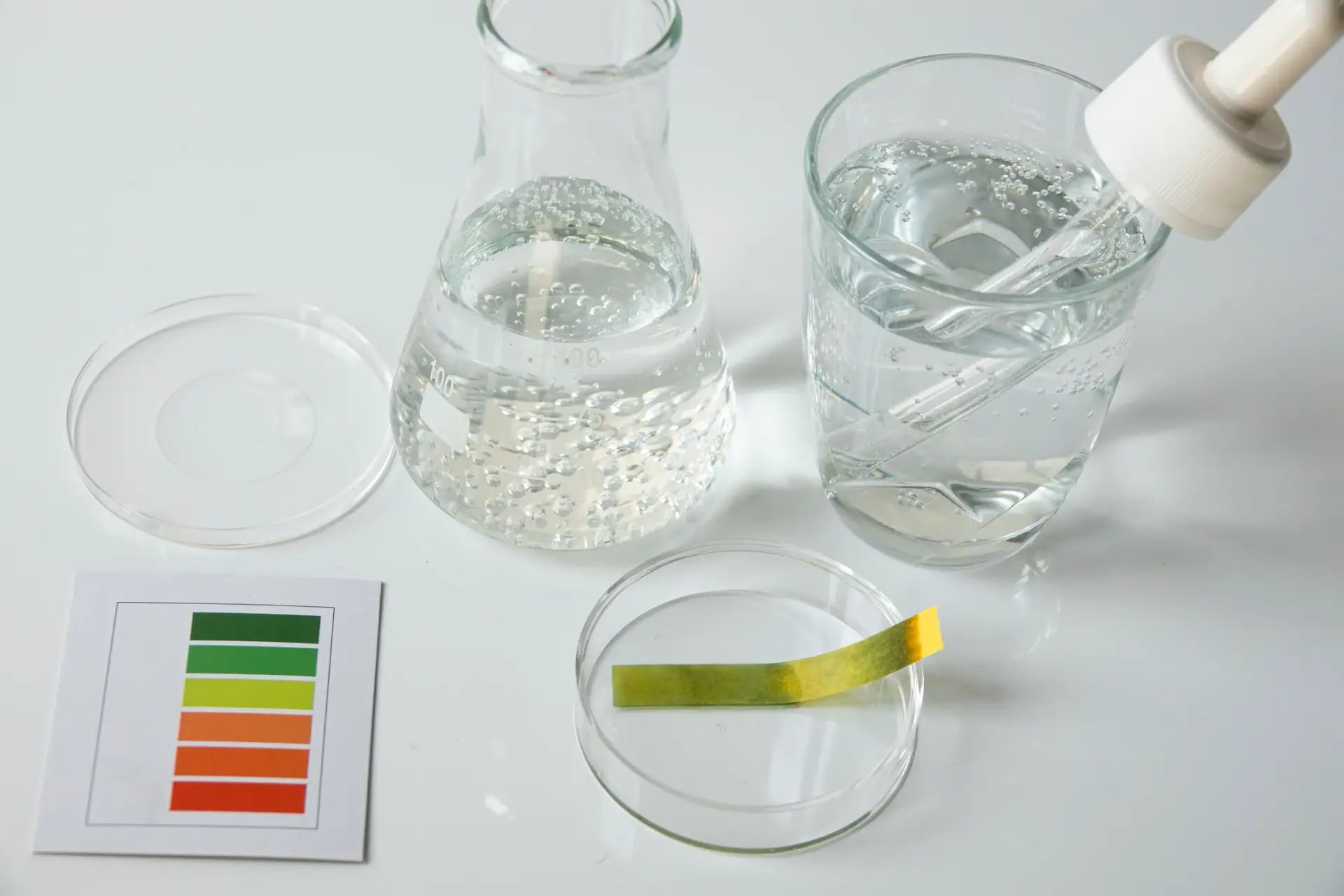
pH measures how acidic or basic water is. It may not always be the most alarming result, but it can help explain other water quality issues.
Low pH water can be corrosive and may contribute to metals leaching from plumbing. High pH water can affect taste, scaling, and treatment performance.
If a report shows low pH along with lead or copper, the pH result may help explain why metals are present. If pH is high and scale is visible, it may connect with hardness or alkalinity.
pH should be read as part of the overall water chemistry picture, not as an isolated number.
Hardness and Total Dissolved Solids
Hardness measures minerals such as calcium and magnesium. Total dissolved solids, often called TDS, measures the total amount of dissolved material in water.
Hardness can cause scale on faucets, cloudy glassware, soap scum, and appliance buildup. TDS can affect taste and may give a broad sense of mineral content, but it does not identify specific contaminants.
A low TDS reading does not automatically mean water is safe. A high TDS reading does not automatically mean water is dangerous. These results need context.
For filter decisions, hardness and TDS may help explain taste, scale, and appliance concerns, but they do not replace testing for specific contaminants.
Iron and Manganese
Iron and manganese are common water quality concerns, especially in private wells. Iron may cause reddish-brown staining, metallic taste, or discoloration. Manganese may cause dark stains or black particles.
These results are often connected to appearance, taste, laundry staining, plumbing buildup, and treatment needs.
If iron or manganese is high, look at the home’s fixtures, appliances, laundry area, and treatment system. A water softener, oxidizing filter, or other treatment may be discussed depending on the full chemistry.
Do not assume staining is only a cleaning problem. It may be a water chemistry issue.
Arsenic, Uranium, and Other Location-Based Contaminants
Some contaminants are naturally occurring in groundwater in certain regions. Arsenic, uranium, gross alpha particle activity, radon, and other location-based contaminants may appear in private well testing depending on geography.
These results can be serious and should be reviewed carefully. If elevated, they may require treatment, retesting, or professional interpretation.
Because location matters, private well owners should test based on local risk factors, not only a generic basic panel.
A water test report is more useful when the test panel matches the property’s location.
PFAS Results Need Careful Review
PFAS results can be especially confusing because the report may list several individual compounds at very low levels. Results may be shown in parts per trillion, and some compounds may be detected while others are not.
PFAS testing must be specifically requested. A general water test may not include PFAS.
If PFAS are detected, review which compounds were found, at what levels, and what current guidance applies. Filter decisions should be based on certified reduction claims and follow-up testing when needed.
For technical contaminants like PFAS, the testing method and reporting limits matter.
Understand Lab Notes and Flags
Many reports include flags such as H, L, ND, <, >, or comments from the laboratory. These flags can indicate high results, low results, non-detects, results below a reporting limit, or results above a measurable range.
Do not ignore the notes section. It may explain sample conditions, holding time issues, method notes, or whether a result exceeded a comparison level.
If a flag is unclear, contact the lab or testing provider. A small symbol can change how a result should be understood.
Reading the notes can prevent misunderstanding.
Do Not Read One Result Alone
Water results are connected. A single number may make more sense when read with other results.
For example, lead may connect with pH and plumbing age. Staining may connect with iron, manganese, and pH. Scale may connect with hardness, alkalinity, and TDS. Bacteria may connect with well condition, recent rain, or sample collection. Treatment performance may depend on several chemistry factors at once.
A good interpretation looks at the full report, not only one highlighted number.
This is why water reports should be reviewed carefully and calmly.
What to Do If a Result Is High
If a result is above a standard or recommended level, take it seriously but do not panic. First, confirm the sample location and method. Then identify what contaminant is elevated. Next, determine whether retesting is needed. Then consider treatment, repair, or follow-up steps.
Different contaminants require different responses. Bacteria may require disinfection. Lead may require plumbing investigation or certified filtration. Nitrates may require treatment or alternative water for infants. Arsenic may require specialized treatment. Low pH may require neutralization.
The solution should match the result.
For broader guidance, visit the regulations page.
When to Retest
Retesting may be useful if a result is unexpected, elevated, or close to a standard. It may also be needed after treatment installation, well disinfection, plumbing repairs, flooding, filter replacement, or a change in taste, odor, or appearance.
Retesting helps confirm whether a result was temporary, whether treatment is working, or whether the problem remains.
For private wells, retesting is part of long-term maintenance. For homes with filters, retesting helps confirm performance.
Water quality can change, so one test should not be treated as the final word forever.
Keep Your Report
Save every water test report. Keep a digital copy and note the sample location, date, filter status, treatment system, weather conditions, and any recent repairs.
This record helps you compare future results. It also helps if you sell the property, rent it, install treatment, or speak with a water professional.
A report is more valuable when it becomes part of a water history.
For more practical education, visit the Water Testing Info blog.
Final Thoughts
Reading a water test report becomes easier when you understand the basics. Start with sample details. Check the units. Compare results with the correct standards or guidelines. Understand that “not detected” does not always mean absolute zero. Separate health-based concerns from aesthetic issues. Read the full report instead of focusing on one number.
A detailed water report can provide valuable information to help you select the right filtration system, plan appropriate treatment, maintain a private well, address contamination concerns, and establish a reliable baseline for future comparisons. Brooklyn independent water testing services can help you obtain accurate results and better understand the condition of your water supply.
Water testing is most useful when the results are understood. The goal is not just to collect numbers. The goal is to make better decisions about the water you use every day.
To learn more, visit Water Testing Info or explore the Water Testing Info FAQ for clear answers about testing methods, interpreting results, regulations, and common water quality questions.