
In the gilded world of Manhattan real estate, “luxury” is a term often applied to floor-to-ceiling windows, Italian marble countertops, and 24-hour white-glove service. Whether it is a sprawling penthouse in the West Village or a sleek new development in Hudson Yards, buyers and tenants expect perfection. However, as we navigate 2026, a unsettling trend has emerged: some of the city’s most expensive units are failing basic water quality audits.
The irony of the situation is palpable. While the New York City Department of Environmental Protection (DEP) delivers water that is legally “safe” to the building’s edge, the final journey to your designer kitchen faucet can introduce a cocktail of contaminants. For the high-net-worth resident, “clean water” is no longer an assumption—it is a variable that requires scientific verification.
The “New Construction” Trap: Bacteria and Biofilm
One of the most surprising findings in 2026 involves brand-new luxury towers. You would expect a building completed in the last year to have the cleanest water in the city, but the opposite is often true. During the final stages of construction, large plumbing systems frequently sit stagnant for months as the building awaits its certificate of occupancy.
This stagnation creates a perfect breeding ground for biofilm—a glue-like substance made of bacteria and other microorganisms that adheres to the inside of pipes. When the residents finally move in, they are not just drinking city water; they are drinking water that has been “marinating” in a biological soup. Professional testing methods have frequently detected elevated heterotrophic plate counts in these units, a result that often leaves homeowners baffled when they compare it to the building’s pristine marketing brochures.
Legionella in the Hot Water Loop
In 2026, the conversation around Manhattan water has shifted heavily toward Legionella. High-end buildings utilize complex hot water recirculation systems to ensure that a resident on the 60th floor gets instant hot water. If these systems are not maintained at the precise temperatures mandated by current regulations, they become incubators for Legionnaires’ Disease.
Recent health reports have highlighted outbreaks linked to the plumbing systems of large apartment complexes rather than just the cooling towers. For the luxury tenant, this means the very system that provides a “spa-like” shower experience could be harboring a respiratory threat. This is why many buildings are now being advised to implement thermal disinfection protocols, a process we often explain in our faq section.
The “Lead-Free” Brass Paradox
Even in units where the pipes are modern copper or PEX, lead remains a persistent ghost. While federal law now mandates “lead-free” plumbing, the definition of that term allows for trace amounts of lead in brass fixtures and valves. In a high-end unit with dozens of custom fixtures, the cumulative leaching can be significant.
Furthermore, many Manhattan “gut renovations” only replace the plumbing within the apartment itself. The water still travels through the building’s original 1920s or 1950s risers to get to the unit. When interpreting results for our Manhattan clients, we frequently find that while the kitchen tap is clean, a secondary “wet bar” or a guest bathroom sink—faucets that are used less frequently—shows a “fail” for lead due to localized leaching and stagnation.
Disinfection Byproducts: The Cost of Cleanliness
To keep the city’s water safe from pathogens, the DEP uses chlorine. While effective, chlorine reacts with organic matter in the water to create Total Trihalomethanes (TTHMs) and Haloacetic Acids (HAA5). These are known as disinfection byproducts (DBPs).
In 2026, research into the long-term health effects of DBPs has intensified. Many high-end residents are surprised to find that while their water is free of bacteria, it contains concentrations of TTHMs that exceed the “health goals” set by environmental advocacy groups, even if they meet the legal regulations. For someone investing in a wellness-focused lifestyle, this chemical residue is a hidden failure that standard “aesthetic” filters often miss.
Why Visual Clarity Is Deceptive
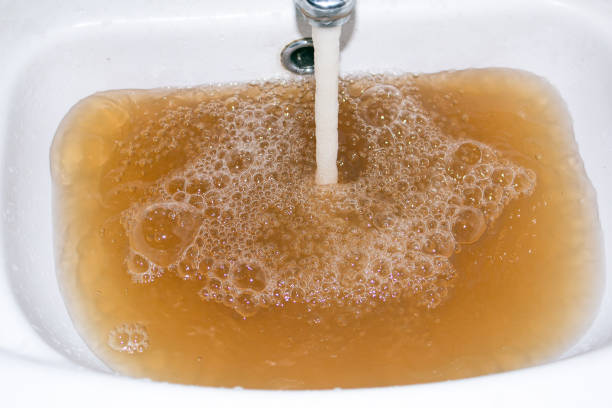
A common refrain among Manhattan residents is: “But my water looks so clear!” In the luxury market, aesthetics are everything, but water quality is invisible. Lead has no taste; Legionella has no smell; PFAS (forever chemicals) have no color.
We have seen cases on our blog where water that looked like bottled spring water was actually carrying 40 ppb of lead—nearly three times the EPA action level. The only way to truly know is to move beyond the visual and into the chemical. This is why we recommend that any Manhattan resident, regardless of the age or price of their building, perform a baseline lab audit.
Remediation in the High-Rise Context
The challenge for a Manhattan unit owner is that they cannot simply replace the building’s infrastructure. If a failure is found, the solution must be localized. This often involves:
- Point-of-Entry (POE) Filtration: Installing a heavy-duty system where the water line enters the apartment to catch lead and chemicals before they reach the taps.
- UV Sterilization: Using ultraviolet light to ensure that any biofilm or bacteria from the building’s risers are neutralized.
- Fixture Upgrades: Replacing “luxury” fixtures that are leaching metals with certified low-lead alternatives.
Conclusion: Closing the Gap in Luxury Living
In 2026, the definition of a “high-end” unit is changing. It is no longer enough to have the best view or the fastest elevator; you must also have the safest water. The hidden failures found in Manhattan’s luxury towers are a reminder that no building is immune to the realities of urban infrastructure and the biology of plumbing.
The most effective next step for any Manhattan resident is to verify their environment. If you are living in a high-end building and haven’t had a professional audit, the best path forward is to contact a specialist today. Don’t let the beauty of your home mask a failure in your most basic necessity.
Hidden dangers of lead in NYC tap water This video is highly relevant as it details how the city’s aging infrastructure can introduce lead and other contaminants into the tap water of even the most prestigious New York City residences.