It is a common scenario in 2026 for homeowners in areas like Jersey City or the Bronx to invest in high-end, “lead-free” brass faucets and modern showerheads, believing that new hardware is the final solution to water contamination. You have done the research, hired the plumber, and selected products that meet the latest regulations. Yet, when the follow-up laboratory report arrives, the numbers are still in the red.
The frustration is understandable. If the point of delivery—the faucet itself—is brand new and certified, why does the water still fail safety benchmarks? The answer usually lies deep within the “premise plumbing,” the chemical interaction between old and new materials, and the complex journey water takes before it ever reaches your glass.
The “Lead-Free” Label Paradox
Many homeowners are surprised to learn that the term “lead-free” is a regulatory definition, not a scientific absolute. Under current regulations, plumbing fixtures can be labeled lead-free while still containing up to 0.25% lead on wetted surfaces. While this is a massive improvement over fixtures from the 1980s, it is not zero.
In 2026, the push for stricter health standards has moved the goalposts. If you are interpreting results based on the most recent medical advice, even trace amounts of lead can be a concern for developing children. In some cases, the very act of installing a new fixture can temporarily increase lead readings. The physical vibration of the installation can knock loose “lead shrapnel”—microscopic flakes of leaded scale from the old pipes behind the wall—which then get trapped in the aerator of your brand-new faucet.
The Pipes Behind the Wall
A new faucet is only the last few inches of a very long journey. If you live in a pre-war building in Manhattan or a mid-century home in Staten Island, the pipes inside your walls are likely made of copper with lead solder or, worse, galvanized steel.
Galvanized pipes are particularly problematic. Over decades, they develop an internal coating of rust and mineral scale. If your home ever had a lead service line, that rust acts like a sponge, absorbing lead over time. Even if the city has replaced the line in the street, your internal galvanized pipes may be “re-seeding” the water with lead. Changing the fixture at the end of the line does nothing to address the hundreds of feet of contaminated piping leading up to it. This is why our testing methods often involve “sequential sampling” to see exactly where along the path the contamination is occurring.
The Service Line: The Root of the Problem
For many residents in the tri-state area, the primary source of lead is the service line—the pipe that connects your home to the city’s water main. While there is a massive effort in 2026 to replace these lines, many remain.
If you have a lead service line, it acts as a constant source of contamination. Water that sits in that pipe overnight becomes highly concentrated with lead. When you turn on your new, expensive kitchen faucet in the morning, the “first draw” might look okay, but the “flushed” water that was sitting in the service line will show a significant spike. No fixture in the world can filter out lead that is entering the home from the street; that requires a dedicated filtration system or a total line replacement.
Galvanic Corrosion: The Chemistry of New Meets Old
There is a phenomenon known as galvanic corrosion that occurs when two different types of metal are joined together. If a plumber connects a new stainless steel or high-quality brass fixture to an older copper or lead pipe without the proper transition fittings, it can create a small electrical current.
This current accelerates the corrosion of the “less noble” metal—in this case, the lead or the old solder. This can actually cause lead levels to rise after a partial renovation. Homeowners often report this issue on our blog, noting that their water quality seemed to get worse after they updated their bathroom or kitchen.
The Role of the Water Heater
We often forget that our water heaters are large storage tanks where water can sit for hours or days. Over time, sediment and heavy metals settle at the bottom of the tank. If you have changed your faucets but kept an older water heater, you may still be seeing “hot water failures.”
Heat increases the solubility of lead and other metals. If you are using hot water for cooking or drinking, you are likely bypassing many of the benefits of your new fixtures. In our faq section, we strongly recommend testing both hot and cold water separately to see if the water heater is the hidden culprit behind your persistent failures.
Stagnation and Biofilm
Safety isn’t just about heavy metals; it is also about biology. In newer “eco-friendly” fixtures, the flow rate is often restricted to save water. While great for the environment, lower flow rates can lead to increased water stagnation in the pipes.
Stagnation allows for the growth of biofilm—a thin layer of bacteria that coats the inside of pipes. If a home is not used frequently, or if a guest bathroom tap is rarely turned on, a new fixture can still produce water that fails for high bacterial counts. To ensure the water is safe, the entire system must be flushed and sometimes “shocked” to remove the biological load that new hardware cannot prevent.
How to Move Forward
If you have already changed your fixtures and are still seeing failures, the next step is not more hardware—it is better data.
- Perform a Sequential Test: Take a series of samples to identify if the lead is coming from the faucet, the interior pipes, or the service line.
- Check the Aerators: Unscrew the screens on your new faucets and look for “shrapnel” or debris that may have been dislodged during installation.
- Evaluate Filtration: If the source of the problem is the service line or the interior pipes, you may need a Point-of-Entry (POE) or Point-of-Use (POU) filter certified for lead removal.
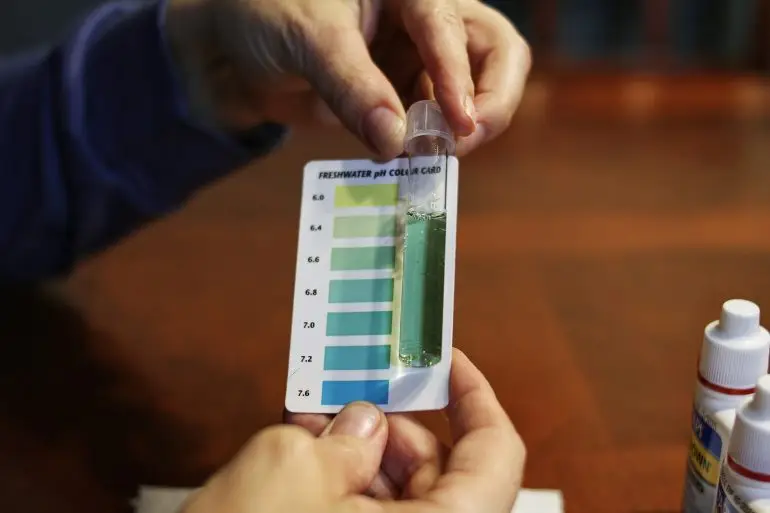
- Consult the Pros: Use professional testing methods rather than DIY kits, which often lack the sensitivity to detect the low levels of lead that current health standards demand.
Conclusion: A Holistic View of Water Safety
Replacing a faucet is like putting a new coat of paint on a crumbling wall—it looks better, but it doesn’t fix the structure. In 2026, real water safety requires a holistic view of your home’s entire plumbing ecosystem. By understanding the interaction between your new fixtures and the old infrastructure they rely on, you can take the right steps to finally achieve the clean water your family deserves.
The most effective next step for any homeowner facing persistent water quality issues is to stop guessing and start measuring. If you have updated your home but are still concerned about the safety of your tap, the best path forward is to contact a specialist to schedule a comprehensive audit. We can help with interpreting results and identifying exactly where the system is breaking down.